

L-Immaniġġjar tal-Iskart Solidu: 2024
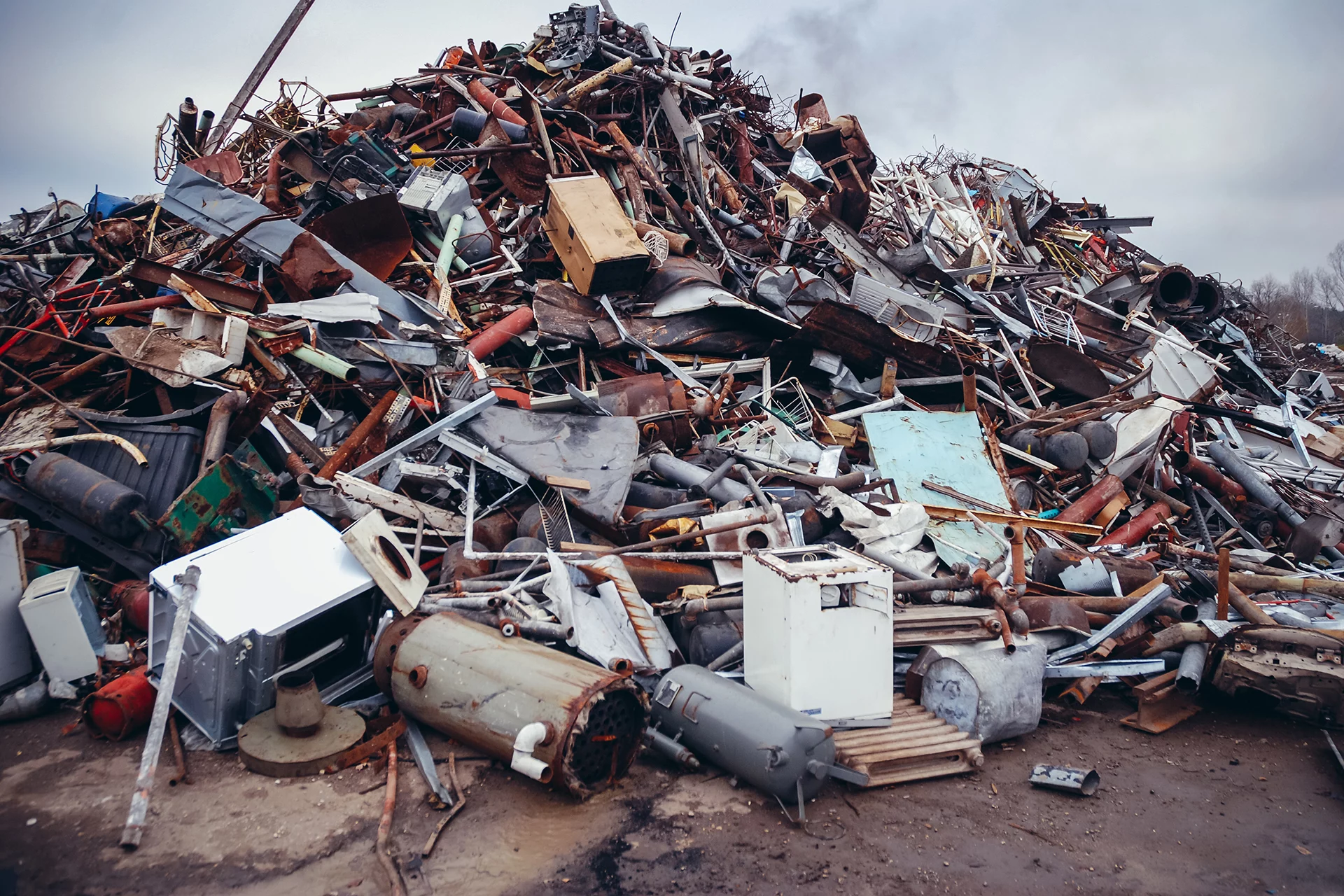
Il-ġenerazzjoni tal-iskart
Fl-2024, il-ġenerazzjoni tal-iskart solidu laħqet it-3.5 miljun tunnellata biex bʼhekk żdiedet bi 17.6 fil-mija meta mqabbla mal-2023. L-iskart mhux perikoluż żdied bi 18.2 fil-mija (519,503 tunnellati) , filwaqt li l-iskart perikoluż naqas bi 3.3 fil-mija (2,392 tunnellata). Meta titqies il-ġenerazzjoni kollha tal-iskart, il-parti minerali żdiedet bʼ21.8 fil-mija (502,983 tunnellata), filwaqt li l-parti mhux minerali żdiedet bi 2.2 fil-mija (14,128 tunnellata).
F’termini assoluti, l-ogħla żidiet kienu rreġistrati fl-Iskart minerali mhux perikoluż tal-kostruzzjoni u t-twaqqigħ (323,198 tunnellata) u fl-Iskart tat-tħammil mhux perikoluż (131,989 tunnellata). Min-naħa l-oħra, l-akbar tnaqqis kien irreġistrat fil-Fdalijiet mhux perikolużi tal-issortjar (25,935 tunnellata) u fl-Iskart perikoluż tal-vetturi mormija (21,482 tunnellata) (Tabella nru 1, Ċart nru 1).
It-trattament tal-iskart
Fl-2024, it-trattament tal-iskart ammonta għal 3.0 miljun tunnellata, u żdied bʼ14.6 fil-mija (386,840 tunnellata) fuq l-2023. Kienu rreġistrati żidiet fl-Irdim (385,533 tunnellata), fʼTipi oħrajn taʼ rimi (175,010 tunnellati) u fir-Rimi fil-miżbliet (14,937 tunnellata). Bil-maqlub taʼ dan, kien irreġistrat tnaqqis fir-Riċiklaġġ (186,385 tunnellata), fl-Irkupru tal-enerġija (1,711-il tunnellata) u fl-Inċinerazzjoni (545 tunnellata).
Meta jitqies il-post fejn seħħ it-trattament, iċ-ċifri juru li għat-trattament li sar f’Malta fl-2024, l-akbar żieda kienet fl-Irdim (385,533 tunnellata), filwaqt li r-Riċiklaġġ kellu l-akbar tnaqqis (198,010 tunnellati). Dwar it-trattament fʼfaċilitajiet barra minn Malta, iż-żieda ewliena kienet fir-Riċiklaġġ (11,625 tunnellata), filwaqt li l-Irkupru tal-enerġija wera l-akbar tnaqqis f’termini assoluti (1,711-il tunnellata) (Tabella nru 2, Ċart nru 2).
Matul l-2024, kienu rreġistrati żidiet fl-iskart li ntrema fil-miżbla tal-Għallis (9,435 tunnellata), fl-Istazzjon tat-trasferiment tal-iskart f’Tal-Kus (Għawdex) (829 tunnellata) u fl-Impjant tat-Trattament tal-Iskart ta’ Sant’Antnin (276 tunnellata). Min-naħa l-oħra, kien irreġistrat tnaqqis fl-Impjant tat-Trattament Mekkaniku-Bijoloġiku tat-Tramuntana ta’ Malta (13,111-il tunnellata) u fil-Faċilità għat-Trattament Termali tal-Marsa (118-il tunnellata) (Tabelli minn nru 3 sa 5).
L-akbar ammont taʼ skart trattat fʼMalta kien dak minerali. Fl-2024, l-irdim tal-iskart minerali mill-kostruzzjoni u t-twaqqigħ żdied bi 58.0 fil-mija (381,727 tunnellata). Min-naħa l-oħra, ir-riċiklaġġ għal din il-kategorija ta’ skart naqas bi 13.6 fil-mija (197,255 tunnellata). Fl-2024, ir-rimi fil-baħar u l-irdim ta’ skart minerali ieħor żdiedu b’175,010 tunnellati u bi 3,806 tunnellati, rispettivament (Tabella nru 6, Ċart nru 3).
Il-ġbir separat tal-iskart
Fl-2024, il-ġbir tal-iskart miċ-ċentri għall-iskart goff u mill-bring-in sites naqas bʼ5,346 tunnellata u bi 18-il tunnellata rispettivament. Min-naħa l-oħra, żdied il-ġbir bieb bieb mid-djar tal-borża organika (2,444 tunnellata), tal-borża griża (834 tunnellata) u tal-ħġieġ (299 tunnellata). Kien hemm ukoll żieda taʼ 887 tunnellata fi ġbir taʼ plastik, metalli u ħġieġ bl-iskema taʼ rifużjoni tal-kontenituri tax-xorb (Tabella nru 7, Ċart nru 4).
Tables
Tables
Methodological Notes
1. Data which is presented in this News Release has been sourced from the administrative records of Circular Economy Malta, the Environment and Resources Authority (ERA), Transport Malta and WasteServ Malta Ltd.
2. Revisions have been made to 2023 data due to updated figures that were made available by data providers. In this release, 2024 data should be considered as provisional.
3. Besides revisions to 2023 data other revisions have been carried out. These include:
● In Table 1, figures for non-hazardous Mineral waste from construction & demolition for 2021 and 2022.
● In Table 2, amounts undergoing Preparation for reuse have been included under Recovery-Recycling for the whole time series. Recovery-Recycling and Recovery-Backfilling were also updated for 2022.
● In Table 6, figures for recycling and backfilling of non-hazardous Mineral waste from construction and demolition for 2022.
4. Waste generation figures shown in Table 1 are derived from records kept by the relevant entities about the waste inputs into waste management facilities. In this process, double counting for inter-facility transfers is eliminated, except for waste that is generated as a result of waste treatment processes (secondary waste).
5. Table 2 comprises a breakdown of waste that was treated in Malta and waste that was sent for treatment in other countries into six waste treatment categories. These are based upon the categories that are used for the reporting of the Waste Statistics Regulation to Eurostat. Waste that is held in temporary storage does not form part of these categories.
6. Waste items in Tables 1 and 3 to 6, are classified according to the Statistical European Waste Classification (EWC-Stat. Version 4).
This classification has been published in the Waste Statistics Regulation 2150/2002 (WStatR) and is a substance-oriented nomenclature used to report waste generation and treatment data to Eurostat. Countries such as Malta, that collect data according to the European Waste Catalogue, can convert the data into EWC-Stat waste categories by means of the table of equivalence which is published in Annex 3 of the WStatR.
7. Discrepancies in the data that is published in this news release and the data that are available on the Eurostat website occur since data for all waste categories reported in this news release are in wet weight. For Eurostat reporting, sludges and dredging spoils are reported in dry weight. Differences may also result due to updates in the source data.
8. Totals for waste generation (Table 1) and treatment (Table 2) are not equal due to the storage of waste at certain waste treatment facilities. Moreover, Table 1 includes intentional double counting due to the inclusion of secondary waste generation from waste treatment activities.
9. Tables 1 and 2 comprise data from all waste management facilities and waste brokers that are permitted by ERA to operate in this sector. Comprehensive lists of these entities can be found on the ERA website as follows:
Waste management facilities
Quarries permitted to accept inert waste
Waste brokers
10. In Table 2, Recovery – Recycling taking place in Malta mainly comprises inert mineral waste. Other materials generally need to be exported for recycling because of the lack of recycling facilities in Malta.
11. Waste generation and treatment data include estimates that are worked out by the NSO for the non-response of inert mineral waste treatment facilities and for mineral waste that is generated by softstone quarrying. The latter is estimated at 30 per cent of the total volume of quarried material.
12. Definitions:
● Inert mineral waste managed in quarry sites: Waste which mainly consists of stones, concrete, bricks, tiles and ceramics from construction and demolition. It also includes clean geological material from excavation works.
● Dredging spoils: Mineral waste that originates from port maintenance activities and is made up of sediments excavated from the seabed.
● Bring-in sites: Collection depots for clean source-segregated recyclable materials. Four types of materials are collected: glass, metals, plastic and paper/cardboard.
● Civic amenity sites: Collection depots for the separate disposal of household bulky waste and recyclables. These sites, which are operated by WasteServ Malta Ltd., are located in Ħal Far, Ħal Luqa, L-Imrieħel, Ta’ Qali, Il-Magħtab and Tal-Kus in Gozo.
● Door-to-door green/grey bag collection: Collection of mixed paper, metals and plastics from households on pre-determined weekdays that has been taking place since 2011. Waste which is collected in this manner is sorted by material type in waste treatment facilities.
● Door-to-door glass waste collection: Collection of glass waste from households usually held twice a month and that has been taking place since 2014.
● Door-to-door organic waste collection: Collection of organic waste from households on pre-determined weekdays. This collection started as a pilot project covering a limited number of localities in 2015 and was extended nation-wide as from 31 October 2018.
● Beverage Container Refund Scheme: Nationwide scheme where a deposit of €0.10 is added to the purchase price of each beverage in containers that are covered by the scheme. Consumers can recoup their deposits by returning the empty beverage container to an approved redemption location which can either be a retailer or a Reverse Vending Machine. The scheme commenced on 14 November 2022 and is operated by BCRS Malta Ltd.
● Recovery: Any operation the principal result of which is waste serving a useful purpose by replacing other materials which would otherwise have been used to fulfil a particular function, or waste being prepared to fulfil that function, in the plant or in the wider economy.
● Recycling: Any recovery operation by which waste materials are reprocessed into products, materials or substances whether for the original or other purposes. It includes the reprocessing of organic material but does not include energy recovery and the reprocessing into materials that are to be used as fuels or for backfilling operations.
● Backfilling: Any recovery operation where suitable non-hazardous waste is used for purposes of reclamation in excavated areas or for engineering purposes in landscaping. Waste used for backfilling must substitute non-waste materials, be suitable for the aforementioned purposes, and be limited to the amount strictly necessary to achieve those purposes.
● Energy recovery: A recovery operation that takes place whenever both the conditions and energy efficiency thresholds which are provided in Annex II to Directive 2008/98/EC are met.
● Disposal: Any operation which is not recovery even where the operation has as a secondary consequence the reclamation of substances or energy.
● Landfilling: The deposit of waste in landfills within the meaning of Directive 1999/31/EC on the landfill of waste. This includes landfills for inert waste, non-hazardous waste and hazardous waste above ground and underground. The definition covers both landfilling in internal sites, where a generator of waste is carrying out its own waste disposal at the place of generation, and in external sites.
● Incineration: A disposal operation where the main purpose of the incineration is the thermal treatment of waste in order to reduce the volume and the hazardousness of the waste, and to obtain an inert product that can be disposed of.
● Other disposal: Operations such as land treatment, deep injection, impoundment of waste and the release of waste into water bodies. These disposal methods can be used only for a limited range of waste types. In Malta, these operations are limited to disposal at sea at the official spoil ground located off the Grand Harbour area.
● Pre-treatment: Preparatory waste treatment operations that are necessary before final treatment (both for recovery and disposal) can take place. In Malta, these treatments comprise essentially waste sorting and mechanical-biological treatment.
● Secondary waste: Waste that is generated by waste treatment operations and which requires further treatment by operations that are classified as final treatment.
13. More information relating to this news release may be accessed at:
Sources and methods
Statistical concepts
Metadata
Classification: List of recovery and disposal operations (Annex I and Annex II of Directive 2008/98/EC)
14. References to this news release are to be cited appropriately. For guidance on access and re-use of data please visit our dedicated webpage.
15. A detailed news release calendar is available online.
16. For further assistance send you query through our online request form.
L-Immaniġġjar tal-Iskart Solidu: 2024
- Fl-2024, l-iskart iġġenerat laħaq 3.5 miljun tunnellata, żieda taʼ 17.6 fil-mija fuq l-2023.
- Il-ġenerazzjoni tal-iskart minerali żdiedet bʼ21.8 fil-mija, filwaqt li l-iskart mhux minerali żdied bi 2.2 fil-mija.
- It-trattament tal-iskart laħaq it-3.0 miljun tunnellata, żieda taʼ 14.6 fil-mija fuq is-sena 2023.
- L-irdim tal-iskart minerali mill-kostruzzjoni u t-twaqqigħ żdied bi 58.0 fil-mija, filwaqt li r-riċiklaġġ taʼ dan it-tip taʼ skart naqas bi 13.6 fil-mija.
- Żdied il-ġbir bieb bieb mid-djar tal-borża organika (2,444 tunnellata), tal-borża griża (834 tunnellata) u tal-ħġieġ (299 tunnellata). Żdied ukoll bi 887 tunnellata il-ġbir bl-iskema taʼ rifużjoni tal-kontenituri tax-xorb.
